


History of India-Pakistan Conflicts: A Timeline of Tensions and Peace Efforts
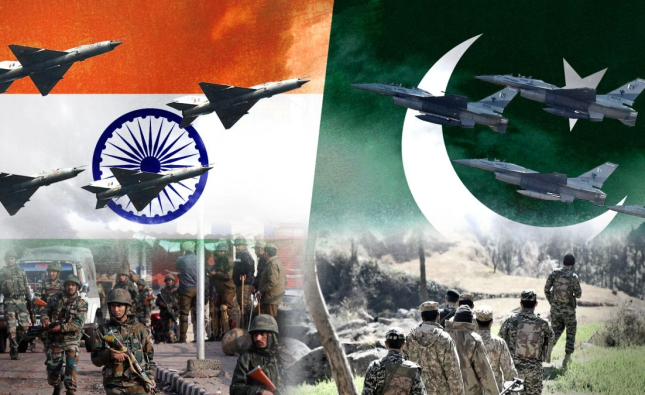
The history between India and Pakistan has been shaped by a complex mix of politics, religion, territorial disputes, and global dynamics. Since gaining independence from British colonial rule in 1947, both nations have experienced multiple conflicts, primarily over the Kashmir region. This article explores the key wars, skirmishes, and peace initiatives that have defined India-Pakistan relations.
📜 Partition and the Birth of Two Nations (1947)
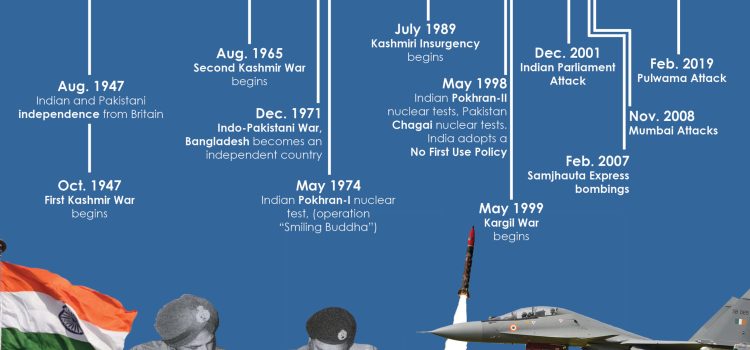
In August 1947, British India was divided into two separate nations: India and Pakistan. The partition led to one of the largest mass migrations in human history and widespread communal violence. The status of Jammu and Kashmir, a princely state with a Muslim majority but a Hindu ruler, became a major source of tension.
⚔️ First Kashmir War (1947–1948)
Shortly after independence, tribal militias from Pakistan entered Kashmir. The Maharaja of Kashmir sought help from India and agreed to accede to the Indian Union. A war followed between the two countries, ending with a UN-mediated ceasefire in 1949. The region was split into India-administered Kashmir and Pakistan-administered Kashmir, a division that still exists today.
🛡️ Second India-Pakistan War (1965)
In 1965, another war broke out over Kashmir. Pakistan launched Operation Gibraltar, sending infiltrators into Indian-administered Kashmir. India responded with full-scale military action. The conflict ended with the Tashkent Agreement, brokered by the Soviet Union.
🔥 Third War and the Creation of Bangladesh (1971)
The third and most significant war occurred in 1971, but this time it was focused on East Pakistan (now Bangladesh). After political unrest and military crackdowns in East Pakistan, India supported the independence movement. The war ended in December 1971 with the creation of Bangladesh and the surrender of over 90,000 Pakistani troops.
💥 Kargil Conflict (1999)
In May 1999, Pakistani soldiers and militants occupied high-altitude positions in Kargil, on the Indian side of the Line of Control (LoC). This led to a limited but intense war known as the Kargil War. India successfully pushed back the infiltrators. Global diplomatic pressure, especially from the United States, played a role in de-escalation.
🚨 Major Terror Incidents and Border Skirmishes
While no full-scale wars have occurred since 1999, terror attacks and cross-border tensions have strained relations:
-
2001 Indian Parliament Attack
-
2008 Mumbai Attacks: Carried out by Lashkar-e-Taiba; led to a global outcry.
-
2016 Uri Attack followed by Indian “surgical strikes”
-
2019 Pulwama Attack and India’s airstrike in Balakot
🕊️ Diplomatic Efforts and Peace Talks
Despite tensions, both countries have made several attempts at peace:
-
Shimla Agreement (1972)
-
Agra Summit (2001)
-
Composite Dialogue Process
-
Backchannel diplomacy in recent years
People-to-people connections, cultural ties, and trade have also played a role in building bridges, although such efforts often falter due to political developments or fresh incidents.
🔮 Looking Ahead: The Future of India-Pakistan Relations
While historical grievances and strategic concerns remain, many experts believe that dialogue and confidence-building measures are the only path to lasting peace. Efforts must focus on:
-
Reducing cross-border violence
-
Addressing humanitarian concerns
-
Encouraging trade and connectivity
-
Managing water-sharing and border issues peacefully
Read Latest Update: India-Pakistan Tensions Rise in May 2025
📌 Conclusion
The history of India-Pakistan conflicts is marked by wars, crises, and periods of fragile peace. Understanding this history is crucial to fostering informed discussions and promoting peace in South Asia.